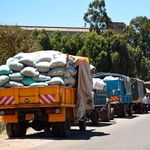
The Court of Appeal has stopped Baringo County Government in its bid to impose cess fees on forest products extracted by Raiply Woods and Timsales.
In a court judgment that saw the Baringo County government ordered to compensate the two logging companies, Sh3,000,000 each, Justice Daniel Musinga and Justice Agnes Murgor established that there was no Act of Parliament that allowed the county government to impose a cess levy on forest produce from State forests.
“In this regard, therefore, I am persuaded that in the absence of an Act of Parliament, the Baringo County Finance Act, 2015 is, to the extent that it attempts to introduce the levying of cess on forest produce, illegal and unconstitutional,” the court said.
Baringo County brought the case to the Court of Appeal following a judgement by the High Court which ruled that the county government did not have the right to levy any taxation on forest produce in state forests.
The background of the case is that in 2015, the Director of Finance at the Baringo County Government informed Raiply Woods, Tim Sales and other forest produce manufacturers of an increase in cess levies on forest products following the County Assembly’s enactment of the Baringo County Finance Act of 2015.
In the case at the High Court, the companies protested the increase in cess levy from Sh60,000 per month to Sh5,195,160 per month without the consultation of key stakeholders.
The County Government of Baringo told the Court of Appeal that article 209(3) of the constitution gave them the right to raise revenue to fund its operations by imposing taxes including those it is authorised to impose by an Act of Parliament.
Additionally, The county government told the Court that it had the right to charge a cess levy for the maintenance of the road within the county which the forest produce manufacturers use to ferry the forest produce.
Counsel for Raiply Woods and Tim Sales, Mr Kibe, noted that the Forest Act put state forests under the control of the national government and the Kenya Forest Service was the one with the mandate to collect all revenue due to the national government with regard to forest resources, produce and services.
The court of Appeal stated that since Raiply Woods and Timsales paid revenue to the national government to be able to harvest forest produce from state forests, the county government’s plan to impose a cess levy on them amounted to double taxation on the same produce.
The Court of Appeal upheld the general damages of Sh3 million that was awarded to each of the forest produce manufacturing companies noting that the violation of any constitutional right ought not to be treated trivially.