Puzzle of missing Sh629bn China imports on KRA data

Cumulatively, goods worth Sh2.76 trillion exported from China to Kenya over the five years to December 2025 do not appear in KRA’s import records.

Photo credit: File

Goods worth Sh629 billion purchased from China and imported into Kenya in 2025 do not appear in the Kenya Revenue Authority (KRA) import records, raising questions about possible massive revenue leakages in what Nairobi earns from the shipment of goods from its largest trading partner.

The General Administration of Customs of the People’s Republic of China (GACC) put its exports to Kenya at Sh1.3 trillion, nearly twice the Sh672 billion that the KRA captured as the value of imports from the Asian economy in the 12 months to December last year.
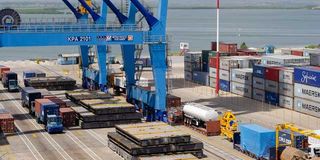
Kenya imports most of its finished goods—from electronics to clothing—from China, which is often touted as the world’s factory due to its industrial prowess.

That a big chunk of the goods recorded as exports by China were not reflected in Kenya’s import records in 2025 raises questions about the integrity of the numbers collected and published by the KRA.

It is a puzzling mismatch as the data given by the KRA’s Customs and Border Control Department is inclusive of freight and insurance charges, which means it should be higher than China’s exports in the same period.

Kenya’s recorded imports from China and Beijing’s registry of exports to Kenya should, in principle, be broadly similar.

However, small differences are common due to exchange rate conversions and the timing of recording shipments, among other factors.

The experts we spoke to insisted the anomaly is unusual, and most likely points to problems of under-declaration of imports, trade invoicing and other forms of customs leakage the country has been grappling with over the years.

The variation has persisted over the years, reaching a high of Sh723 billion in 2023 before it reduced to Sh533 billion a year later and rose again in 2025.

Cumulatively, goods worth Sh2.76 trillion exported from China to Kenya over the five years to December 2025 do not appear in KRA’s import records.

GACC says that between 2021 and 2025 the country exported goods valued at Sh5.35 trillion against KRA’s import figure of Sh2.587 trillion, leaving an unexplained gap of Sh2.76 trillion.

China has been Kenya’s largest source of imports for more than a decade, accounting for about a quarter of all goods brought into the country.

Customs taxes on imports are also one of the government’s biggest sources of revenue, making any persistent discrepancy in import records significant for both tax administration and trade policy.

While differences in trade statistics can arise from factors such as the timing of shipments, goods routed through third countries and differences in statistical classification, experts say a persistent gap of this magnitude warrants closer scrutiny because it could point to under-declaration of imports, trade mis-invoicing or other forms of customs leakage.

If a significant part of the discrepancy reflects imports that escaped customs declaration, the government may have lost substantial import tax revenue while some goods may have bypassed regulatory checks, experts argue.

The Sh629 billion gap represented about 49 percent of the value of goods that China recorded as exports to Kenya in 2025, continuing a pattern that has persisted for at least five consecutive years.

The discrepancy was Sh96 billion higher than the Sh533 billion gap recorded in 2024, which came after a Sh733 billion gap in 2023, a year when the Kenyan Shilling had significantly depreciated against major currencies.

The persistent gap between China’s export records and Kenya’s import statistics has raised questions about whether it reflects statistical differences, goods routed through intermediary countries or under-declaration of imports that could have reduced customs tax collections.

“It has several policy implications, because with such a huge gap it points to possible revenue leakages that may have been missed,” said economist Churchill Ogutu, head of research at Capital A Investment Bank.

The KRA did not respond to detailed questions on the source of the discrepancies via an email sent to the tax agency on July 18.

However, the Treasury has previously revealed plans to have the KRA work with its counterpart agencies in other jurisdictions to determine the true value of imports shipped in from China.

As part of its revenue strategy for the medium term, the Treasury disclosed that the government will be working with other tax authorities in determining the true value of “high-risk imports from China,” which is aimed at addressing the problem of mis-invoicing.

Trade mis-invoicing involves manipulating the price, quantity, or quality of a good or service on an invoice so as to shift capital illicitly across borders.

The government reckons that the value of most of these products—especially electronics such as mobile phones and computers — has not been accurately priced, leading to tax leakages running into billions of shillings.

“Specific tax measures to be implemented include…to establish a clear framework on the exchange of information (EOI) with other tax jurisdictions for both domestic taxes and customs to ensure the flow of information e.g. valuation of high-risk imports from China and Transfer pricing paused by multinationals,” the Treasury said in its medium-term revenue strategy for the period 2024-2027.

Customs taxes remain one of the KRA’s biggest revenue streams. In the nine months to March 2026, the authority collected Sh733.7 billion in customs revenue, accounting for 36 percent of all tax collections, underscoring the importance of accurately recording imports.

Between 2021 and 2025, the Kenya National Bureau of Statistics recorded exports to China totalling Sh121.5 billion, while the GACC recorded Sh151.9 billion. The difference of Sh30.4 billion is the cost of shipping and insurance.

“It’s normal to see what’s recorded as imports being slightly higher than what’s the equivalent exports from the source country because one is FOB and the other includes shipping costs,” said Mr Ogutu.

“But a situation where imports are less than exports is difficult to explain. It could be a result of several factors.”

Some scholars have attributed such discrepancies in records to goods smuggling, especially when the goods have been illegally obtained, are contraband, or when importers want to evade paying taxes.


PAYE Tax Calculator

Note: The results are not exact but very close to the actual.