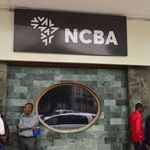
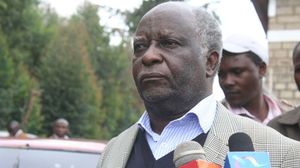
Businessman Muhoho Kenyatta is the top individual shareholder in NCBA Group with 227.3 million shares currently valued in the market at Sh20 billion, making it the largest disclosed personal fortune on the Nairobi Securities Exchange (NSE).
The bank disclosed in a May 4 circular to shareholders that Muhoho, part of the business dynasty of Kenya’s founding President Jomo Kenyatta, holds the NCBA shares directly and indirectly through investment vehicles.
This is the first time the full extent of Muhoho’s interest in NCBA has been revealed, with the disclosure made in connection with Nedbank Group’s offer to acquire a controlling 66 percent stake in the Kenyan bank.
He joined the board of NCBA as a non-executive director on December 1, 2025 amid the buyout talks with Nedbank.
His status as a director of the bank has seen his beneficial interest in the firm disclosed alongside that of other board members.
Muhoho’s interest of 227.3 million shares in NCBA indicates that the wider Kenyatta family could have a larger stake in the firm, where the majority of the shares are held under multiple investment vehicles.
These investment vehicles date back to the era of Commercial Bank of Africa (CBA) and NIC Group – the banks that operated independently for decades before merging in September 2019 to create NCBA Group.
The Kenyatta family has long been associated with Enke Investments, which holds 217.4 million shares in NCBA equivalent to a 13.2 percent stake.
Previous disclosures indicated that Muhoho directly owned 12.7 million shares worth Sh1.1 billion.
The family of former Central Bank of Kenya governor, Philip Ndegwa, owns First Chartered Securities, which controls 246.1 million shares representing a 14.94 percent stake in the bank.
Some individual family members have separate personal investments in the bank, augmenting their total interest in the firm.
NCBA director Andrew Ndegwa holds 77.6 million shares in the lender valued at Sh6.83 billion, placing his dividend earnings at Sh551.3 million.
His brother James Ndegwa, who chairs the bank’s board, has 76.6 million shares worth Sh6.74 billion and on which he will be paid a dividend of Sh543.9 million.
Muhoho’s interest in NCBA –which will see him earn a dividend of Sh1.6 billion for the year ended December 2025— dwarfs other disclosed NSE fortunes, including banking stakes held by other billionaires.
Equity Group’s chief executive, James Mwangi, has 127.8 million shares in the bank worth Sh9.6 billion and which will earn him a dividend of Sh734.9 million.
I&M Group director Suresh Shah holds 174.9 million shares in the bank worth Sh8.6 billion, a move that will see him receive a dividend of Sh656 million.
The Kenyattas are considered one of Africa’s wealthiest families, with their vast business interests spanning transport, insurance, hotels, farming, land ownership and the media industry in Kenya.
Other investments are Brookside Dairy, high-end Peponi School and the upmarket and chic hotel chain, Heritage Hotels East Africa.
The family is also linked to Media Max Company, which owns K24 TV, Kameme Radio and The People Daily newspaper.
The deal with Nedbank is expected to immediately diversify the fortunes of Muhoho and his fellow top shareholders of NCBA.
Nedbank has made a cash-and-stock offer to NCBA shareholders, with those accepting its deal converting most of their holdings into shares of the South African firm, which is listed on the Johannesburg Stock Exchange (JSE).
“In addition, the board recognises the strategic benefits for NCBA Shareholders associated with Nedbank’s listing on the JSE. The accepting shareholders who will receive Nedbank shares are likely to benefit from the JSE’s strong liquidity, deep market diversity and robust regulatory environment, all of which enhance investment flexibility and long-term value potential,” NCBA’s board said in the circular.
The board noted that the JSE is one of the most liquid exchanges in the emerging markets, enabling investors to enter and exit positions efficiently while reducing transaction-related frictions.
“Its breadth of sectors and instruments allows for natural portfolio diversification, and banking stocks in particular offer exposure to a well-capitalised, resilient financial system supported by disciplined regulation and consistent dividend-paying histories,” the board said.
NCBA itself will help to diversify Nedbank’s business, which currently comprises operations in six Southern Africa markets. The Kenyan banking multinational is a strong player in the East African market, where its digital credit services reach millions of customers.
“Together, these features make Nedbank, a JSE-listed banking entity, an attractive option for investors seeking both liquidity and balanced, long-term growth potential,” NCBA’s board added.
NCBA shareholders can tender 66 percent of their holdings to Nedbank. Out of this pool of shares, 80 percent of the units will be converted into Nedbank shares at a rate of 4.02994 shares for every 100 shares.
The Nedbank shares are priced at 250 rand (Sh1,928.5) using the deal’s exchange rate.
The remaining 20 percent of the shares will be bought in cash at a rate of Sh2,100 for every 100 shares or Sh21 apiece.
Those whose holdings are not large enough to secure them at least 200 Nedbank shares will receive only a cash price of Sh105 per share for the stocks they will have tendered.
Nedbank says it will spend a maximum of Sh31.6 billion in the cash component, while the number of shares it will issue in the deal is capped at 43.8 million. The transaction is valued at a total of 13.9 billion South African rand (Sh109.3 billion at current exchange rates).
NCBA will remain listed on the NSE, with minority investors holding a 34 percent stake.