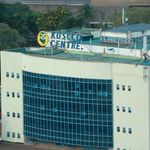
The troubled Kenya Union of Savings and Credit Co-operatives (Kuscco) is facing a deepening insolvency crisis over a Sh17.7 billion liabilities hole, as courts handle mounting claims that it cannot meet its debts.
The High Court has since issued preservation orders barring Kuscco from disposing of assets, transferring funds, or entering new financial obligations pending the determination of a liquidation petition filed by Rupsa Sacco, formerly known as PCEA Ruiru Sacco.

The petition claims the apex co-operative body is in severe financial distress, with liabilities of Sh17.7 billion far exceeding its Sh5.2 billion assets, leaving a deficit of Sh12.5 billion and raising fears over the stability of the member Saccos.
"The Sh12.5 billion deficit has been confirmed in sworn affidavits and Cabinet Secretary statements. The systematic risk posed to the cooperative sector by the company's continued operation in its present state warrants the intervention of this court," said Rupsa's advocates.
The court filings also show that the company operates through five affiliated entities, including Kuscco Group Limited, Kuscco Housing Limited, Kuscco Mutual Assurance Limited, Kuscco Insurance Agency Limited, and Kuscco Grandmark Estate (Management) Limited.
Rupsa is seeking to liquidate Kuscco over alleged failure to settle a Sh108.8 million debt arising from deposits made between 2019 and 2024.
It adds that Kuscco holds financial deposits from approximately 4,168 member saccos totalling not less than Sh24.8 billion against identifiable assets of Sh5.2 billion. Rupsa says the information on Kuscco's indebtedness is contained in the PricewaterhouseCoopers Forensic situational assessment report.
The petitioner told the court that Kuscco had failed to honour a statutory demand issued in February 2026 for settlement of the Sh108 million debt, with “no payment made, no security offered, and no composition proposed.”
"More than 21 days elapsed from the date of service. No payment was made. No security was offered. No composition was proposed. The issuance of a statutory demand and the failure to comply within the stipulated 21-day period is sufficient ground for presuming insolvency under section 384(1)(a) of the Insolvency Act, 2015," says the petitioner.
Rupsa argues that since Kuscco is unable to pay its debts, it meets the legal threshold for insolvency.
The High Court has already issued orders restricting Kuscco from disposing of assets, transferring funds, or dealing with shares in affiliated firms pending the determination of the liquidation case.
The petition further states that Kuscco is both cash-flow and balance-sheet insolvent, citing its own admissions in earlier legal proceedings that its bank accounts were overdrawn.
Two forensic audit reports by PricewaterhouseCoopers and Grant Thornton confirmed the financial position, according to court documents.
The filings also point to a pattern of asset disposals, including the closure of 12 out of 17 branches, the sale of more than 32 vehicles, and staff cuts from 250 to 79 employees.
“Each disposal reduces the identifiable asset pool. Each disposal is irreversible,” the petitioner states in the court papers.
Creditors argue that only about Sh369.3 million has been paid out so far, representing roughly six per cent of confirmed liabilities of more than Sh6.1 billion owed to 177 Saccos. The petitioner told the court the payments were selective and made “outside the statutory priority order,” raising concerns about fairness among creditors.
At the same time, Kuscco’s financial troubles are spilling into disputes with member Saccos. In a separate recent ruling, the Co-operative Tribunal heard that Kencom Sacco, which had borrowed Sh183 million from Kuscco, is unable to repay the loan and lacks attachable assets.
Kencom told the tribunal it is negotiating with banks, marketing land in Mavoko, and seeking a foreign loan to raise funds. It also disclosed that it has repaid only about Sh21 million and asked for time to restructure its finances.
“The respondent does not have assets that can be attached and/or used to settle the decretal amount,” the Sacco’s chief executive told the tribunal.
The overlapping cases highlight a widening liquidity crisis in the co-operative sector, where Kuscco is both a creditor to struggling Saccos and a debtor facing liquidation claims.
The Rupsa petition also raises concerns over transactions with affiliated entities, including housing and insurance subsidiaries, whose financial positions remain unclear.
The court is expected to give further directions on the insolvency petition on May 27, 2026, as creditors push for the recovery of funds tied up in the institution.