A surge in medical bills, road accidents and car thefts drove insurance claims above the Sh100 billion mark for the first time last year amid fears premiums could spike.
The latest Insurance Regulatory Authority (IRA) analysis shows medical claims rose 17.9 percent to Sh52.61 billion and compensation from accidents and stolen cars increased 12.4 percent to Sh40.1 billion.
This has continued the trend where motor and medical insurers go for years without underwriting profits, making them rely on investment income to avoid losses.
The jump in accidents and medical bills as well as a rash of fraudulent claims are expected to jack up insurance bills as insurers seek higher premiums to cover the losses.
Medical and car insurance accounted for 90.2 percent of all the Sh102.77 billion claims paid by general insurers last year—a rise from Sh90.2 billion in 2024.
The rising medical payouts emerged on the back of rising healthcare costs, increased hospital visits, and amplified use of outpatient and specialised services, leaving insurers weighing premium hikes, even as some dropped some clients.
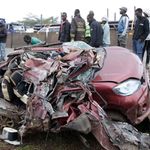
A surge in road accidents, rising repair costs, and car thefts combined to keep motor insurance claims on an uptick.
Many insurers have reacted with increased premiums at the renewal stage and increased reliance on technology to combat fraud.
“An increase in the level of claims has been the theme cutting across the industry,” said Britam Holdings CEO Tom Gitogo, singling out medical and motor as problematic lines of business.
The rise in claims could trigger premium rises during renewals as the loss ratio—the portion of premiums used to pay for claims and related expenses— closed at 77.7 percent for medical, 77.9 percent for motor commercial and 73.6 percent for motor private.
Other insurance segments have loss ratios of less than 50 percent.
The Sh52.61 billion medical claims accounted for 51.2 percent of the insurers’ payout in the review period, marking the first time in over a decade that payouts towards settling hospital bills have exceeded half of total payouts in a single year.
Claims paid out for insuring private vehicles rose to Sh20.69 billion as those towards commercial vehicles surged to Sh19.41 billion from Sh17.31 billion.
And with road usage on the rise, spare part costs surging, theft patterns evolving and fraud persisting, insurers are locked in a costly balancing act between protecting customers and protecting their own bottom lines.
As claims continue to surge and pile pressure on insurers, policyholders, too, are beginning to feel the ripple effects.
Motor vehicle premiums are trending upwards as insurers price in higher risks, while some companies have quietly tightened underwriting standards to limit exposure.
In certain cases, insurers are refusing to cover older vehicles or models deemed prone to accidents and theft. The increased premiums and refusal to insure certain vehicles have, on several occasions, put insurers and customers at loggerheads.
The proportion of medical has been on an upward trajectory over the past six years, rising from 37.64 percent of total payouts in 2019. Top medical insurers, including Jubilee Health, CIC General, Britam General and AAR, all saw a rise in claims last year.
The market leader in medical insurance, Jubilee Health, saw its net profit fall to Sh424.84 million in 2025 from Sh910.47 million in the previous year due to higher claims.
The unit’s insurance revenue grew 23.8 percent to Sh16.68 billion and service expenses, which include claims, rose 31.1 percent to Sh16.78 billion, prompting an underwriting loss of Sh220.74 million.
“The health business experienced elevated claims in Kenya and Uganda, particularly within select corporate segments, impacting the loss ratio,” said the insurer’s parent company, Jubilee Holdings.
The rising medical payouts have come on the back of escalating healthcare costs, increased hospital visits, and higher utilisation of outpatient and specialised services, leaving insurers weighing premium hikes, even as some have dropped some clients.
Medical costs such as consultation, laboratory tests and medicine have been on a rise, accelerating health inflation as major hospitals such as Nairobi Hospital pushed to charge insurers more.
Nairobi Hospital had rolled out an increase in prices ranging from 2.07 percent to 61.3 percent or between Sh70 and Sh5,000, affecting services such as computed tomography (CT scan), magnetic resonance imaging (MRI), ultrasound, X-rays, bed charges and intensive care unit (ICU). However, it shelved the increment after uproar from insurers.
Consumer price index, which tracks changes in the cost of a basket of goods and services commonly purchased by households, showed health division inflation rose 2.8 percent in the year to December 2025.
In December alone, prices of antibiotics rose by 1.8 percent while the services for general practitioners went up by 0.4 percent in the same period, according to the Kenya National Bureau of Statistics (KNBS).
KNBS said in March this year, cancer medicine experienced an increase of 2.8 per cent in a single month as health inflation continued to rise.
The rise in claims, added to underwriting costs, has seen many insurers post underwriting losses despite premiums having risen to Sh93.28 billion from Sh76.21 billion.
Old Mutual, the only top five medical insurer to post a reduction in claims during the review period, said it had to let go of business worth Sh1.3 billion “because the pricing wasn’t right.”
Old Mutual Holdings CEO Arthur Oginga said the insurer was deliberately repositioning its portfolio by taking more specialty business, such as fire, machinery, engineering and construction, which enjoy wider margins, unlike medical and motor classes that have low margins.
“In medical, you typically have a loss ratio of between 70 percent and 80 percent so you are left with only 20 to 30 percent and you still haven’t covered your operational expenses,” said Mr Oginga.
“If you don’t have sufficient volume, you will not be able to cover your overheads. In medical insurance, from the day you write the business, claims start coming in the following day.”
Kenya’s insurers view the two largest classes of general insurance—motor and medical— as the worst hit by fraud amid competition that has seen some underwriters underprice and end up struggling to honour claims.