Nairobi-based investment firm Afri Fund Capital plans to raise $6 billion (Sh777.6 billion) worth of commercial debt in the first of a series of bond sales aimed at financing the infrastructure needs of the Lamu Port South Sudan Ethiopia Transport Corridor (Lapsset).
This is an Eastern African flagship infrastructure and logistics project designed to provide seamless connectivity that links Kenya, Ethiopia and South Sudan.
Afri Fund Capital says the amount will be raised through cross-listing of the debt instrument on three bourses --the Nairobi Securities Exchange, London Stock Exchange and the New York Stock Exchange.
On March 9, Afri Fund Capital signed a Memorandum of Understanding with the Capital Markets Authority (Kenya) to support uptake of capital market instruments for infrastructure investments.
The leadership of the firm says that despite the challenge of shallow and illiquid capital markets, mobilising capital at scale will be crucial if Kenya and Africa are to meet the rising infrastructure needs amidst an ever-tightening fiscal space as debt service and social spending dominate budget allocations.
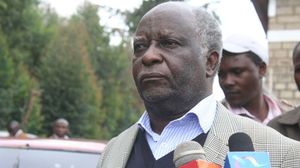
“We understand the constraints of our local market and what we are doing is working with the Capital Markets Authority to cross-list with London and New York so that once we bring those two larger markets then the $6 billion becomes a small ticket to raise," Afri Fund Capital executive director Martin Ngunga, said.
"Some of the partners we are dealing with, especially those in New York, issue tickets as large as $3.5 billion to their local municipalities every other week. The key thing is that we have a pipeline of infrastructure projects that can fit that ticket size.”
The firm says that despite the steady rise in Kenya’s pensions and asset management industry, the dynamics of cost of capital make it non-viable to rely on the local market to mobilise debt for funding infrastructure whose returns tend to be long-term in nature. Kenya’s pensions industry now holds Sh2.8 trillion worth of assets under management, having grown from Sh2.3 trillion at the close of 2024.
“Our local financial sector, because of the cost of capital, is often not able to invest in long-term infrastructure projects because of the mismatch," Ngunga said.
"There’s no way you can develop infrastructure with 13 or 14 percent cost of capital. So, you have to look for long-term capital that is cheaper and patient and looking for stable annuities. This means we need to attract global pension investors.”
Afri Fund Capital says it looks to undertake this ambitious capital raise between June and August 2026 and has been engaging deep-pocketed global investors to sense their appetite for an infrastructure-backed debt instrument.
Among the global partners Afri Fund Capital says it is working with are UK headquartered construction consultancy firm Gleeds and the Port of Rotterdam from the Netherlands.
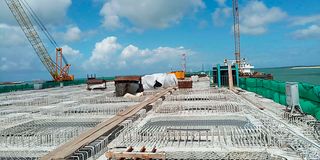
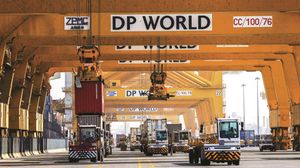
Ongoing construction of first berth-Lapsset.
Photo credit: Pool
The firm says it has the backing of both the African Union (AU) and the New Partnership for Africa’s Development (Nepad) to mobilize capital to finance the infrastructure needs of Lapsset which is estimated at a total project cost of $25 billion (Sh3.2 trillion).
“We have been working on this for the last four years. We have gone around globally and sounded it off to large capital holders and they raised two issues, the first was perceived risk and the second was the issue of small tickets and we realised that we needed to target raising at least US$1.5 billion," Ngunga, says.
Afri Fund Capital says that it is persuaded that Lapsset offers a bankable investment that should be appealing to global investors keen on portfolio diversification and exposure to Africa’s infrastructure as an asset class.
“Lamu Port is a hinterland gateway port directly for seven countries and indirectly for fourteen countries. It is because we are yet to work on the infrastructure that Lamu Port’s potential remains unrealized," Ngunga said.
"We have been in talks with both Nepad and AU and both have told us that Lapsset is something Africa needs to get right. The two have asked us to make sure the cost of transport on the corridor falls below $0.60 per kilometer per tonne.”
The firm’s ambitious capital raise comes at a time when Kenya has established its National Infrastructure Fund with a seed capital of Sh106.3 billion being proceeds from the government’s divestiture of a 65 percent stake from Kenya Pipeline Company.