Time flies with great content! Renew in to keep enjoying all our premium content.
Prime
Absa under pressure to diversify revenues
Peter Mutua, the director of Absa Customer Network and Distribution presents a symbolic Maasai attire to Absa Group CEO Kenny Fihla during his three-day visit in Kenya.
South Africa’s multinational Absa Group is putting pressure on its Kenyan unit to raise more income from non-lending activities in order to reduce the impact of falling interest rates on earnings.
The bank’s Chief Executive Officer Kenny Fihla told investors that the Kenyan and Ghanaian units have demonstrated the need for the lender to diversify its revenue sources in markets outside of South Africa.

Absa Bank Kenya made Sh10.37 billion in net interest income in the first quarter of this year, which accounted for 70 percent of its total operating income of Sh14.65 billion.
This was among the higher ratios among Tier One banks, only trailing DTB (77 percent), I&M Group (76.2 percent) and Stanbic Bank Kenya at 76 percent.
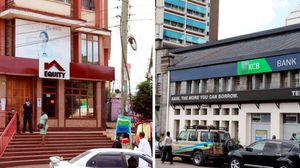
Equity Group had the lowest ratio of net interest income to operating income at 59.7 percent, followed by NCBA (60.9 percent), Standard Chartered Kenya (62.7 percent), Co-operative Bank of Kenya (66.4 percent) and KCB Group at 68.6 percent.
Banks have been looking to grow their non-interest income streams through digital channels in order to protect their profits from the impact of volatile interest rates.
Mr Fihla said the group felt the impact of lower interest income in Kenya and Ghana, where central banks aggressively cut interest rates over the past two years in order to improve lending to the private sector and spur economic growth.
“Reflecting on the net interest income headwinds in the African Region, there is a very high concentration in Ghana and Kenya. These two geographies are overweight, which is why we have been talking about the need to accelerate the diversification of our business,” the Absa Group boss said.
“If one major accident happens in one of those, we feel it at group level, and that is what the impact of a lower net interest income in the Africa Region has demonstrated. We are correct in wanting to accelerate the diversification of our business.”
In the first quarter of the year, Absa Kenya saw its net profit fall by 13.8 percent to Sh5.3 billion.
Its net interest income decreased by 7.9 percent to Sh10.37 billion, while non-funded income was down by five percent to Sh4.28 billion.
The lender cut its loan book by Sh4.5 billion to Sh303.8 billion and increased investments in government securities by Sh30.5 billion to Sh174.5 billion.
The increased exposure to government debt, however, came at a time interest rates in the economy fell in line with the Central Bank of Kenya (CBK) lowering its base lending rate to 8.75 percent from nine percent at the beginning of the year and 13 percent in August 2024.
In the last two years, the rate of the 91-day Treasury Bill has halved from 16.7 percent to 8.2 percent, while bonds are now paying 12 to 14 percent from highs of 18 percent just two years ago.
In February, Mr Fihla visited Kenya where he outlined the lender’s drive to deepen its presence in the retail market, while also exploring opportunities to make acquisitions and expand its footprint in East and Central Africa.
The South African multinational is also tightening its grip on the Kenyan unit by bidding for an additional 16.5 percent stake through an open market tender purchase at the Nairobi Securities Exchange.
The offer, which opened on Tuesday and runs until August 11, will see Absa’s stake in the Kenyan bank rise to 85 percent from 68.5 if fully subscribed.
Absa Group is purchasing the additional 895.9 million shares at a unit price of Sh34.50 each, valuing the deal at Sh30.9 billion.