Absa Bank Kenya’s consumer banking unit posted a revenue and profit before tax growth of 12 percent and 50 percent, respectively, in 2025 as the traditionally corporate and investment banking-focused lender shifted attention towards the mass retail market to drive expansion.
The bank attributes the growth to a strong diversification push to cut its reliance on lending and borrowing and instead move towards value-added services, including payments, bancassurance and wealth management.

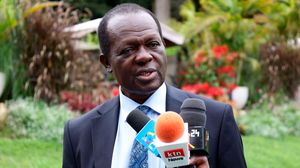
“The consumer banking business has been on an execution trajectory for the last three years. We really are ahead of our plan, which was to double the business unit’s earnings in five years. Last year revenue was up 12 percent, driven by non-funded income, which was up 21 percent,” Absa Consumer Banking Director, Moses Muthui, said in an interview.
The lender said that diversification away from traditional lending and borrowing has enabled its consumer banking business unit, to cushion its performance at a time when the Central Bank of Kenya’s aggressive cuts in the benchmark rate have impacted the performance of the lending business across the banking sector.
In the 12 months to December 2025, the apex bank slashed the benchmark rate by 200 basis points to 9.75 percent, pushing lending costs down and squeezing banks’ earnings. The CBK further slashed its benchmark lending rate by 25 basis points to 8.75 percent on February 10, 2026, marking the 10th consecutive reduction.
Mr Muthui projects that the CBK is poised to continue cutting the benchmark rate in 2026, creating a greater need for banks to focus on strengthening their non-funded income sources.
“Any banking franchise has to think about its fortunes outside interest rates because interest rates will go up and down. Increasingly, banks must ask themselves the question of where they are adding value to the customers they serve. We do not think we are done yet and are expecting further decline in interest rates,” he said.
Absa Bank Kenya increased its dividend payout by 17.1 percent to Sh2.05 per share, amounting to Sh11.1 billion on the back of a 10 percent rise in net profit for the full year to December to Sh22.9 billion.
The lender’s board recommended a final dividend of Sh1.85 per share, bringing the total payout to Sh2.05 when added to the interim payout of Sh0.20.
The latest payout represented a rise from Sh1.75 per share, amounting to Sh9.5 billion, paid a year earlier when net profit was Sh20.87 billion.