A Sh500 million windfall from a Supreme Court decision that blocked taxes on e-commerce card payments boosted Absa Bank Kenya’s 10 percent rise in net profit for the full year to December to Sh22.9 billion, a top official has revealed.
In a landmark decision, the Supreme Court on December 5, 2025, held that payments made by banks that process card payments on behalf of merchants to card companies are not royalties and therefore not subject to withholding tax. The ruling handed the banking sector a windfall through the release of provisions that had been made in view of the case.
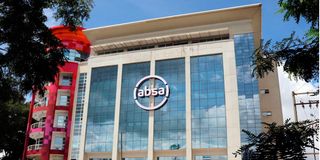
Absa Bank Kenya Chief Finance Officer Yusuf Omari revealed that the lender bagged a Sh500 million boost from the apex court’s decision, lifting its profits for the year.
“If withholding tax were going to be applied to credit card payments, the whole industry would have been affected, and it would just mean that it would be more expensive to transact using the cards. We have been making provisions for the case, and certainly last year we had made a provision, but now that we won the case, we were then able to reverse that provision,” he told Business Daily in an interview.
The Supreme Court decision followed a petition by Barclays Bank Kenya Ltd (now Absa Bank Kenya Plc) against the Kenya Revenue Authority (KRA), which had audited the lender’s withholding tax payments between January 2007 and September 2011.
Following the audit, KRA demanded withholding tax on payments by the bank to card companies, arguing that the payments constituted royalties as well as interchange fees paid to issuing banks, which were deemed to be management fees.
In its judgment, however, the Supreme Court held that fees paid by an acquiring bank to card companies are not royalties within the meaning of Section 2 of the Income Tax Act and are therefore not liable to withholding tax under Section 35 of the Income Tax Act.
The court further held that interchange fees paid by an acquiring bank to an issuing bank are not professional fees and are therefore not liable to withholding tax under Section 35 of the Income Tax Act.
“In 2026, we are very glad because so far, I have not made that provision for the last two months. It’s a provision that you make throughout the year, and when you win the case, then you release the provision. On a yearly basis the provision would be just about Sh500 million,” Mr Yusuf says.
Improved profits
The release of the withheld tax provisions, coupled with the bank’s aggressive cost rationalisation in 2025, helped it post improved profits. The lender recorded a 12.2 percent reduction in operating expenses, including loan loss provisions and software costs.
Absa spent Sh28.6 billion last year to keep its operations running, down from Sh32.6 billion in 2024, helping cushion the decline in revenue from the bank’s core lending business.
The bank’s loan book grew marginally, by one percent, to Sh312.1 billion from Sh309 billion, while interest income from lending declined to Sh42.8 billion from Sh53.3 billion.
The drop in interest earned from loans followed a decline in the price of credit as the Central Bank of Kenya aggressively cut its indicative rate to push banks to lower lending rates.
Investment in government securities, which grew 17 percent to Sh151.5 billion, earned the bank Sh13.2 billion, helping to partly cover the gap left by the decline in earnings from loans.